In Florence, Simone Rocha’s first standalone menswear show for SS27 recast a familiar working garment: the apron. Vogue Runway, Wallpaper*, British GQ, AnOther and Vogue Italia describe leather and linen aprons, artisanal embroidery, exposed fastenings and tailoring that feels both grounded and sensitive. For the long men’s skirt, this is more than a runway image. A superimposed panel organises the front, sharpens the waist and makes the construction legible. It connects the practical authority of an atelier garment with the calm of a long silhouette. Nino Cappello translates the idea as modern skirt architecture, not costume: precise, masculine in construction, Made in Italy—and confident enough not to confuse hardness with strength.
15 July 2026 · Editorial · Atelier Apron / Leather Panel / Long Skirt / Tender Masculinity / Men Can
Editorial
1) From working garment to silhouette
An apron has a lucid logic: it protects, gathers and marks the centre of the body. Integrated into a long men’s skirt, it becomes a calm front plane that controls the surface and guides the eye to the waistband. The effect is graphic rather than folkloric. A clean upper edge, a visible overlap and a continuous hem below the panel keep the construction credible.
Editorial
2) Leather gives hold; linen gives movement
Matte nappa creates a firm front and lends control to softer pleats beneath it. Linen works differently: its dry hand, gentle irregularity and movement relax the line. Both succeed when their role is clear. Leather stabilises; linen releases. Paired with lightweight wool or poplin, they create depth without unnecessary weight.
Editorial
3) Hardware replaces ornament
Small snap hooks, metal rings or pearl-toned buttons make the point of connection visible. On a men’s skirt, these details are strongest when they genuinely close, hold or adjust. One industrial fastening can carry more authority than a sequence of decorative effects. It speaks of construction and craft—the detail discipline at the heart of fine Italian menswear.
Editorial
4) Tenderness needs no apology
The Florence reports read Rocha’s collection as tender and grounded at once. That suggests a contemporary form of confidence: a broderie shirt, a discreet ruffle or a pearl button does not subtract masculinity from a look. It simply needs a precise frame of shoulder, waist, cloth and shoe. Men Can also means refusing to hide sensitivity.
Editorial
5) The Nino Cappello translation
For everyday wear, let the panel cover roughly one third to one half of the visible skirt front. The long skirt beneath should remain legible as a complete silhouette; a shirt, waistcoat or short jacket can repeat one colour from the panel. The result is not disguise but a measured rhythm of plane, pleat and movement—quiet enough for the city, distinctive enough for evening.
Styling
Styling box: four atelier panels for the city
Four exact combinations in which the apron panel reveals construction while the long skirt retains its composed line.
Florence: black leather over pleats
Black nappa panel, charcoal pleated skirt, ivory poplin shirt, three-button jacket and polished Oxfords.
The layered depth stays formal because leather, wool and shoes form one dark axis.
Milan: tobacco linen and broderie
Tobacco linen panel, long charcoal skirt, restrained broderie shirt, dark-brown waistcoat and loafers.
Dry linen grounds the openwork cotton; the waistcoat keeps shoulder and waist precise.
Paris: ink blue with industrial clasps
Ink-blue wrap skirt, black leather panel with two metal clasps, pale-blue shirt, navy jacket and sleek boots.
The hardware is small but functional; tonal tailoring removes any suggestion of costume.
Copenhagen: olive utility and a fine collar
Olive utility panel, black pleated kilt-skirt, graphite rugby knit, short work jacket, socks and derby boots.
A restrained collar detail introduces sensitivity while panel and boots hold the look firmly to the ground.
Men Can: a strong outfit can show craft, tenderness and clear masculine construction at the same time.
Sources
Briefly read
Today’s research focuses on the Pitti Uomo debut of 18 June 2026 and the analysis published in the weeks that followed.
Vogue Runway: Documents leather and linen aprons, pearl buttons, embroidery and broderie, while explicitly treating tenderness as a quality beyond gender.
Wallpaper*: Explains the tension between classic men’s shapes, apron ties, broderie poplin and a sensitive, detail-led masculinity.
British GQ: Describes the collection as tender yet grounded and turns its loose tailoring and apron forms into wearable style moves.
AnOther: Highlights nappa aprons with industrial fastenings, painter’s smocks and formal tailoring with kilt-like pleats.
Vogue Italia: Places the Florence show in its Pitti context and identifies tailoring, shirts, knitwear, Oxfords, embroidery, aprons and bib fronts as key codes.
Discover long skirts, wrap silhouettes and Italian construction logic in the Nino Cappello shop and lookbook.
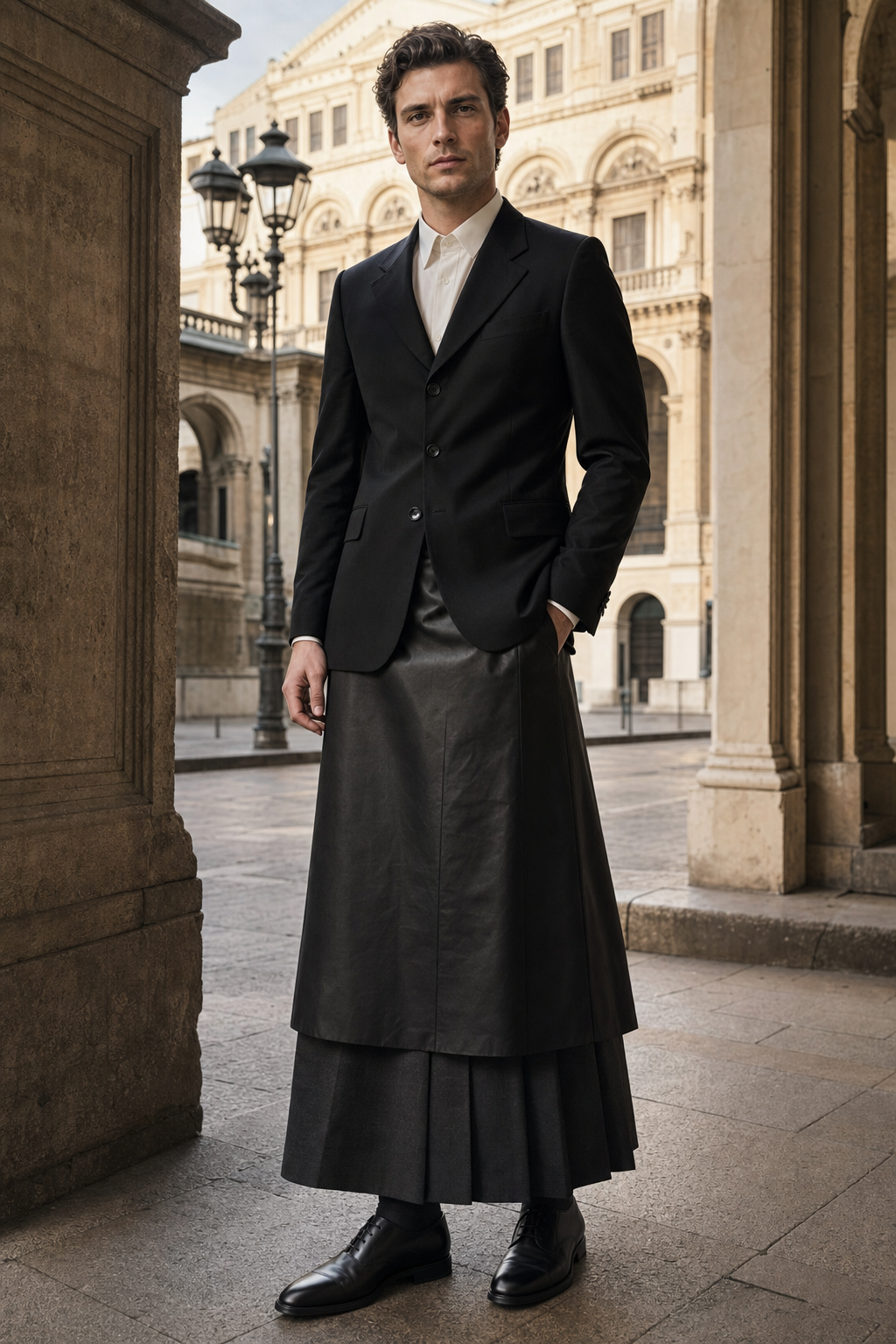 Florence: black leather over pleats
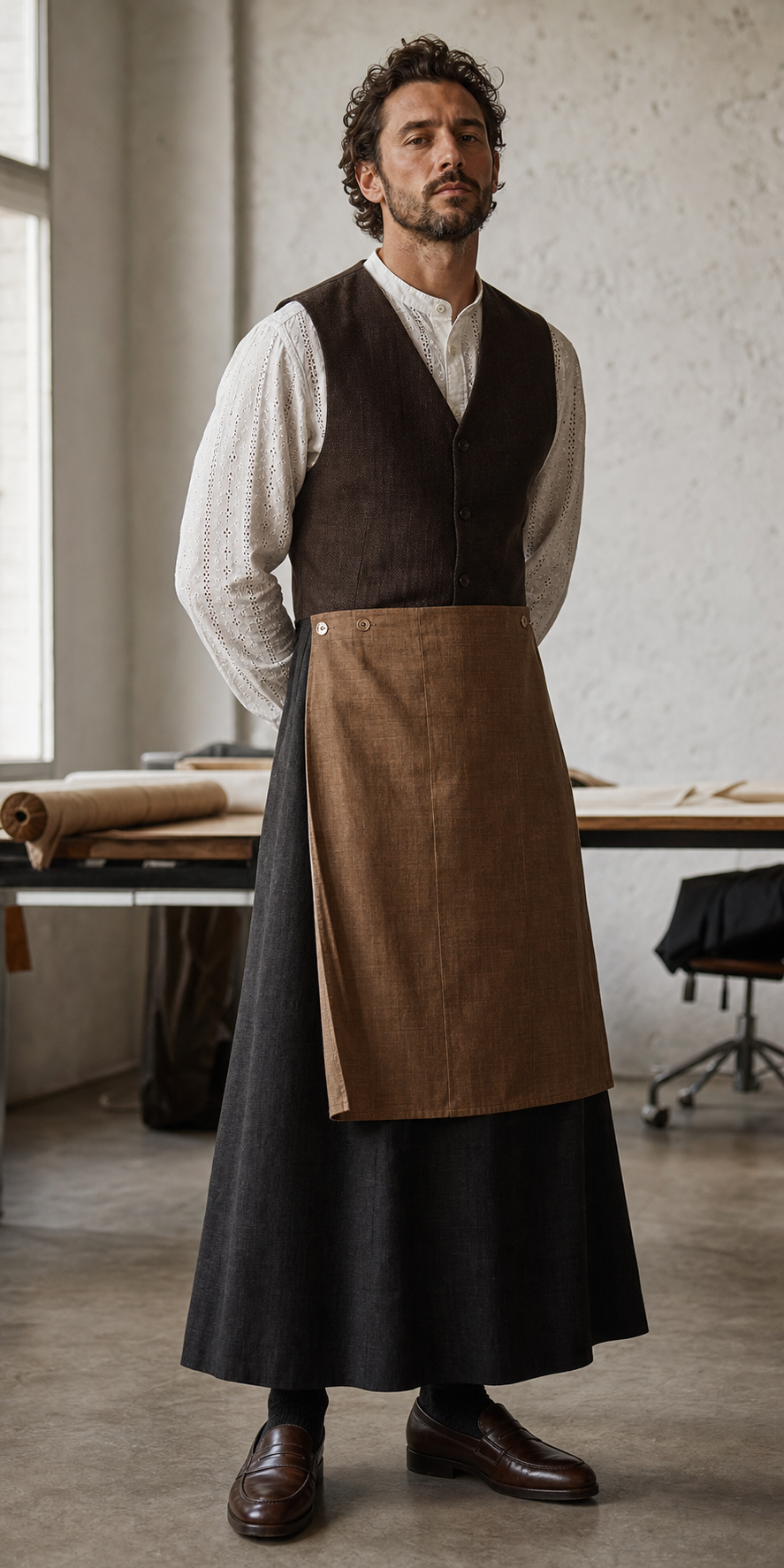 Milan: tobacco linen and broderie
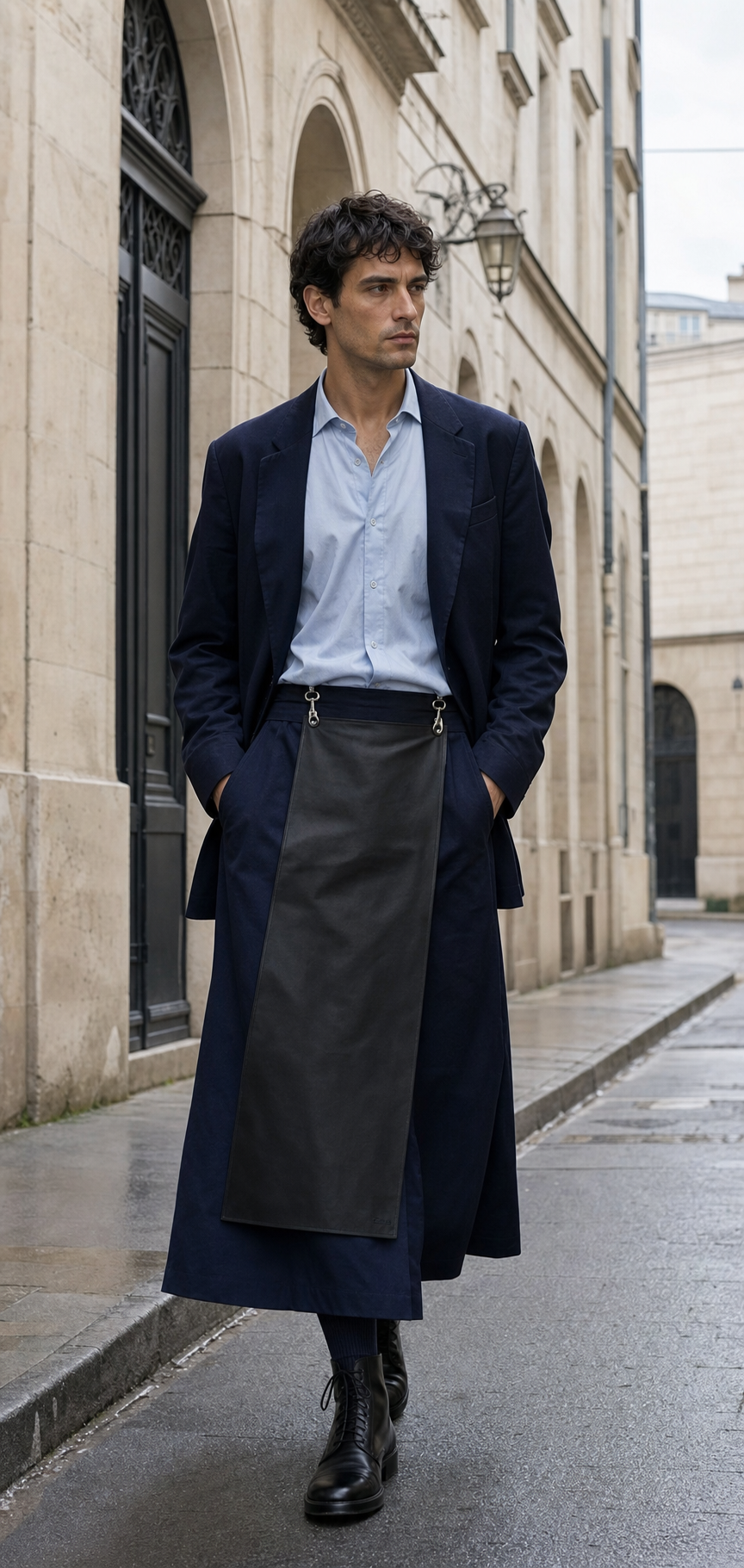 Paris: ink blue with industrial clasps
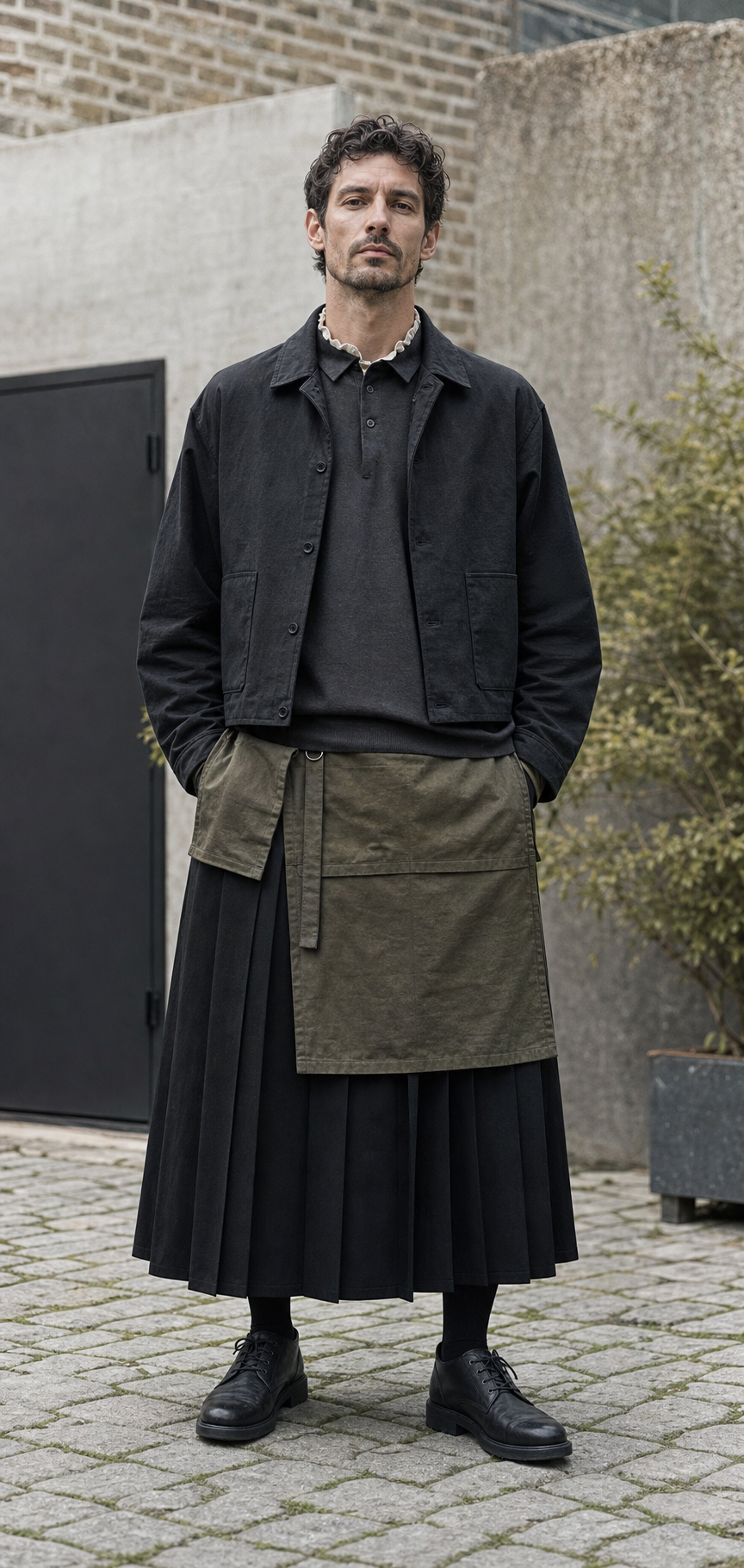 Copenhagen: olive utility and a fine collar